FOB stands for “Free on Board” and is one of the Incoterms rules published by the International Chamber of Commerce (ICC). It defines who pays which costs and at which point the risk for the goods passes from seller to buyer. FOB is one of the most common terms when importing from Asia.
What FOB covers
Under FOB the seller delivers the goods on board the vessel at the agreed port of shipment, for example “FOB Ningbo”. From that moment the buyer bears the risk of loss or damage.
Seller: packs the goods, brings them to the port, handles export clearance, loads them on board
Buyer: books and pays sea freight, insurance, unloading at the destination port, import clearance, duties and import VAT, transport to the warehouse
FOB is for sea transport only
Under Incoterms 2020, FOB is intended for sea and inland waterway transport only. It does not fit air freight, rail or road.
Why FOB is tricky with containers
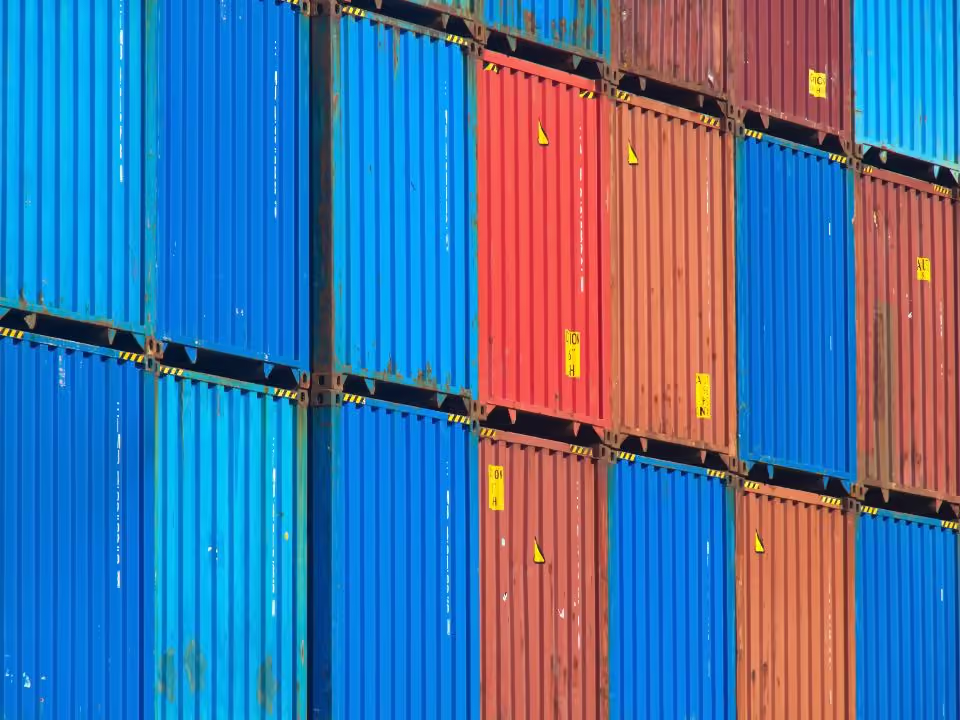
Container goods are usually not delivered on board directly but handed over at the container terminal. From there the seller has no control over when the container is loaded – yet under FOB it bears the risk until loading. The ICC therefore recommends FCA (“Free Carrier”) for container shipments: the risk passes as soon as the goods are handed to the carrier at the agreed place, for example at the terminal.
FOB or FCA – which is better for buyers?
FOB is well established in trade with Asia, and prices are often quoted FOB. For cargo that really goes straight on board it works well.
FCA reflects container shipping more accurately and avoids disputes about damage between terminal and vessel.
Either way: name the place precisely – not just “FOB China”, but the port and ideally the version, e.g. “FOB Shanghai Incoterms 2020”.
Comparing FOB prices correctly
An FOB price is not your landed cost. To compare it with a delivered offer, add sea freight, insurance, port charges at destination, duties, import VAT and inland transport. Only these landed costs show whether an offer really pays off.